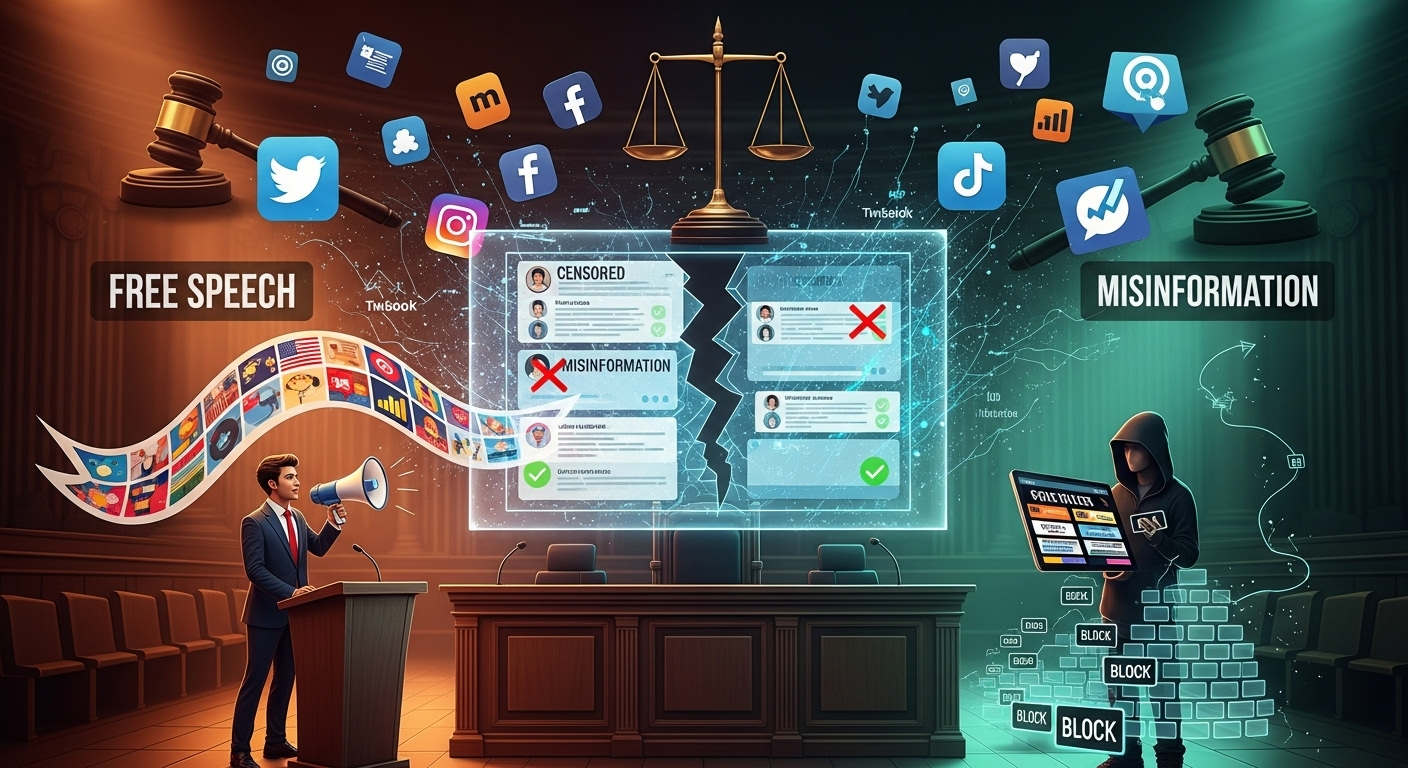
So, here’s a thought that’s been bouncing around in my head lately, especially after that…well, let’s just say interesting exchange I had with my uncle at Thanksgiving. Social media. Specifically, this whole tug-of-war between letting everyone say what they want (free speech, baby!) and trying to stop the spread of stuff that’s, shall we say, less than factual. It’s a thorny issue, isn’t it? I mean, where do you even start drawing the line? I initially thought it was as simple as “facts vs. lies,” but oh boy, was I wrong. It’s like peeling an onion – layers upon layers of complexity. Actually, an onion is a terrible analogy. It’s more like trying to untangle Christmas lights after they’ve been in a box all year.
The thing is, we’re not just talking about harmless cat videos anymore (though, let’s be honest, those are pretty important). We’re talking about elections. Public health. You know, the really big stuff. And the platforms? They’re stuck in the middle, trying to appease everyone, but inevitably pleasing no one. I’ve got to admit, this part fascinates me. The sheer scale of the problem is mind-boggling. Millions of posts every second, all vying for our attention. How can you possibly police that effectively without turning into some kind of Orwellian overlord? It seems almost impossible. Almost.
The Slippery Slope of Content Moderation

Here’s where it gets tricky. Who decides what’s “misinformation”? What one person considers a blatant lie, another might see as a perfectly valid (if somewhat fringe) opinion. And that’s before you even get into the whole political bias accusation game. Social media companies are essentially becoming arbiters of truth, and honestly, is that a role they should even want? I’m not so sure. They’re tech companies, not Supreme Courts. But, they have become the de facto town square, whether they wanted to or not. Think about it this way: if the town crier started censoring opinions he didn’t like, there’d be riots in the street. Is this any different? Crazy Games is a popular platform that faces similar challenges related to content moderation.
But, wait, there’s something even more interesting here. What about the algorithms themselves? They’re designed to show you more of what you already like, right? So, if you happen to like conspiracy theories, guess what? You’re going to see a whole lot more of them. And that can create these echo chambers where people only hear what they already believe, reinforcing their existing biases. That can get dangerous, and quickly.
Free Speech vs. Harm: Where’s the Line?
This is the million-dollar question, isn’t it? Everyone loves to quote Voltaire (“I disapprove of what you say, but I will defend to the death your right to say it”). Sounds great on a t-shirt. But what happens when what you say causes real harm? What about hate speech? What about incitement to violence? My colleague wrote something similar about the state of EV technology. Is that protected speech? I think most people would agree that there are limits. But where do you draw them?
I remember reading about the “marketplace of ideas” concept – the idea that the best way to find the truth is to let all ideas compete freely. But that only works if everyone is playing by the same rules, right? If some ideas are being spread by bots and fake accounts, or amplified by manipulative algorithms, is it really a fair fight? I’m not convinced.
The Role of Platforms: Responsibility or Censorship?
Social media platforms argue they’re just providing a platform, not creating the content. They’re like the phone company – they just connect people, they’re not responsible for what people say on the phone. But is that really true? They’re actively shaping the flow of information through their algorithms. They’re making decisions about what gets seen and what gets buried. And that gives them a huge amount of power.
Actually, that’s not quite right. It’s more nuanced than that. They’re not just providing a platform. They’re curating an experience. They’re trying to keep you engaged, to keep you scrolling. And that means they’re making editorial decisions, whether they admit it or not.
And here’s the rub: if they take responsibility for the content on their platforms, they risk being accused of censorship. But if they don’t, they risk being accused of enabling the spread of misinformation and hate. It’s a lose-lose situation. Or is it?
Consider the alternative. Some suggest that platforms should not censor content directly but instead focus on labeling potentially misleading or false information, and allowing users to make their own judgments. And I have to say, that makes a lot of sense to me. It’s about empowering people to think for themselves, rather than trying to tell them what to think.
Navigating the Future of Online Discourse
The frustrating thing about this topic is that there are no easy answers. No simple solutions. It’s a complex problem with deep roots in human nature, technology, and politics. I keep coming back to this point because it’s crucial. We need to have a more honest and open conversation about the role of social media in our society. We need to acknowledge the potential harms, but also the potential benefits. And we need to find a way to balance free speech with the need to protect ourselves from misinformation and hate. I’m not sure what the answer is. But I think it starts with being more critical of what we see online, and more willing to engage in civil discourse with people who hold different views. Maybe then, just maybe, we can start to untangle those Christmas lights.
FAQ: Social Media Censorship
Why is social media censorship such a hot topic right now?
Well, it all boils down to the increasing influence social media has on, well, everything. From politics to public health, these platforms are shaping the conversation. And when they start deciding what’s acceptable to say and what isn’t, people understandably get nervous about free speech. Plus, with so much misinformation floating around, it’s a constant battle between protecting the public and stifling legitimate expression.
How do social media platforms decide what counts as misinformation?
That’s the million-dollar question! Each platform has its own policies, but generally, they rely on a combination of algorithms, human moderators, and sometimes even partnerships with fact-checking organizations. The problem is, defining “truth” can be really tricky, and what one person sees as a fact, another might see as an opinion. It’s a tough balancing act, and they don’t always get it right.
Is social media censorship a violation of free speech?
Here’s where it gets complicated. The First Amendment in the US protects you from government censorship, not from private companies. So, technically, social media platforms can set their own rules about what you can and can’t say. However, many argue that because these platforms have become such essential spaces for public discourse, they have a responsibility to uphold free speech principles, even if they’re not legally required to.
What can I do to avoid spreading misinformation online?
Great question! The first step is to be skeptical. Don’t just believe everything you read. Check your sources. Look for evidence from multiple, reputable sources. And be wary of emotionally charged headlines or articles that seem designed to provoke a strong reaction. A little bit of critical thinking can go a long way.