Okay, let’s be real. The robots are coming for our jobs. Or, at least, that’s the headline everyone’s screaming about, right? But when it comes to journalism and AI, the story is way more nuanced than Skynet taking over the newsroom. I’ve been watching this unfold for years, and honestly, it’s a wild ride of possibilities, fears, and, yeah, maybe a little bit of outright absurdity.
Think about it: AI can churn out basic news reports, scrape data faster than any human, and even personalize content to an individual level. Sounds great, right? More news, faster, tailored just for you. But… here’s the thing. What about the soul of journalism? The digging, the questioning, the ethical considerations, the gut feeling that something’s not quite right? Can an algorithm really replicate that?
I initially thought AI would simply automate the more tedious parts of journalism, freeing us up to do the real work. And that’s still part of the equation. But the deeper I get, the more I see how profoundly it’s already changing the landscape. It’s not just about automation; it’s about the very nature of truth, credibility, and the role of the journalist in society.
The Rise of the Algorithm Reporter
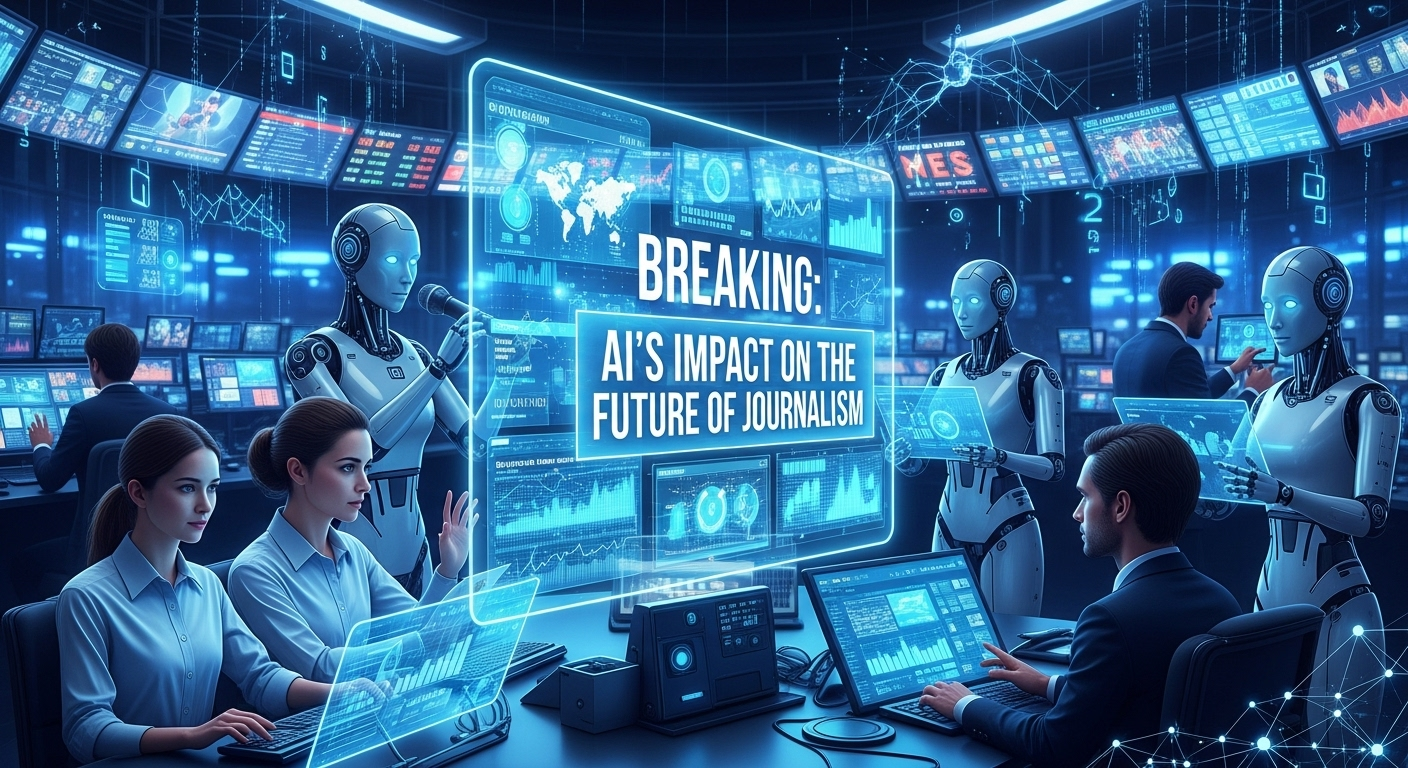
Let’s talk specifics. AI is already being used to write things like sports reports, financial summaries, and even weather forecasts. These are data-heavy, fact-driven pieces where accuracy and speed are paramount. And I’ve got to admit, this part fascinates me. Imagine instantly generating thousands of localized weather reports, all tailored to specific microclimates. That’s powerful stuff.
But, and it’s a big but, the danger lies in relying too heavily on these algorithm-driven reports. They can be incredibly efficient, sure, but they also lack critical thinking and the ability to contextualize information. They report what happened, not why it happened. Think about it this way: an AI can tell you the stock market went up, but it can’t explain the underlying investor sentiment or the potential long-term consequences. The automation of news is here to stay.
And that leads to some seriously tricky ethical questions. Who is responsible when an AI-generated report contains errors? How do we ensure transparency when algorithms are making decisions about what news to prioritize? These are issues the industry is grappling with right now, and there are no easy answers.
Navigating the Murky Waters of Deepfakes and Misinformation
Okay, let’s dial up the paranoia a bit. Because if AI-generated news is a potential problem, deepfakes and AI-powered misinformation are a full-blown crisis in the making. We’re talking about hyper-realistic fake videos and audio recordings that can be used to spread propaganda, damage reputations, and even incite violence. And I’ve got to say, the technology is getting scarily good.
It’s easy to dismiss this as a problem for politicians and celebrities, but think about the potential impact on everyday people. Imagine someone using a deepfake to fabricate evidence in a legal case or to blackmail a business rival. The consequences could be devastating.
But there are solutions being worked on! Actually, that’s not quite right. I should say there’s work being done. Progress is being made on detection technology. But it’s a constant arms race. The deepfakes get better, the detection gets better, then the deepfakes get even better… you get the idea. It’s exhausting.
Speaking of technology, why don’t you check Honda CR-V Hybrid test in Muskau Heath to learn more.
The Human Element: Why Journalism Needs Us More Than Ever
So, where does all this leave us? Are journalists destined to become obsolete, replaced by tireless, emotionless robots? I don’t think so. But I do think our role is going to evolve dramatically.
The future of journalism isn’t about competing with AI; it’s about leveraging its strengths while emphasizing the uniquely human qualities that algorithms can’t replicate. We need to be fact-checkers, investigators, storytellers, and ethical guides. We need to provide context, analysis, and critical thinking. We need to be the voices that cut through the noise and speak truth to power.
Wait, there’s something even more interesting here. It’s about building trust. In a world awash in misinformation and AI-generated content, trust is the most valuable currency a journalist can have. And that trust is earned through rigorous reporting, ethical conduct, and a genuine commitment to serving the public interest.
And let’s not forget the importance of community. Local journalism, in particular, plays a vital role in connecting people to their communities and holding local leaders accountable. AI can’t replicate the personal connection a local reporter has with their audience or the deep understanding of local issues.
I keep coming back to this point because it’s crucial. Journalism needs to be about more than just facts; it needs to be about people. It needs to be about telling stories that resonate with our shared humanity and inspire us to build a better world. And that’s something no algorithm can ever do.
Embracing AI: Tools and Breaking: AI’s Impact on the Future of Journalism
This sounds so backwards, doesn’t it? Even as AI threatens to take away many journalism jobs, it can be used as a potent tool to bolster the output and research capabilities of journalists. It is crucial to embrace and utilise these tools to continue to compete in the space. With the support of the right AI platforms, you can improve SEO and grow your audience.
Also, make sure you check the Exploring the Seat Arona FR on the Wingst Ridge post to read more.
FAQ: Your Burning Questions About AI and Journalism Answered
How do I know if a news article was written by AI?
That’s the million-dollar question, isn’t it? There’s no foolproof method, but there are some telltale signs. Look for overly generic language, a lack of original reporting, and a heavy reliance on data without context. If the article feels… lifeless, it might be the work of an algorithm. Also, keep an eye out for any disclosures about AI involvement. Reputable news outlets will be transparent about their use of AI.
Why are people so worried about AI in journalism?
The biggest concern is the potential for misinformation and bias. If AI is used to generate news without proper oversight, it could easily amplify existing biases or spread false information. There’s also the fear that AI will lead to job losses for journalists and a decline in the quality of reporting. While X has these benefits, it’s important to recognize that we can use them with care.
Can AI actually improve journalism?
Absolutely! AI can be a powerful tool for journalists, helping them to research stories, analyze data, and even personalize content for readers. The key is to use AI responsibly and ethically, with human journalists maintaining control over the editorial process.
What skills will journalists need in the age of AI?
Critical thinking, investigative reporting, storytelling, and ethical judgment. These are the skills that AI can’t replicate. Journalists will also need to be tech-savvy, able to understand and use AI tools effectively. More and more journalists are using technology every day.
So, yeah, AI is changing the game. But it’s not game over for journalism. It’s a chance to redefine our role, to focus on what makes us human, and to build a more informed and trustworthy news ecosystem. And that’s a challenge I’m genuinely excited to be a part of. Just make sure you’re not getting all your news from robots. Okay?