Okay, let’s be real. The idea of AI writing news used to sound like some sci-fi fever dream, right? Like, robots churning out articles devoid of humanity. But here we are. It’s happening. And the implications…well, that’s what’s keeping me up at night (besides my neighbor’s ridiculously loud chihuahua).
Actually, “robots” isn’t quite right. It’s more sophisticated than that. Think algorithms trained on massive datasets, capable of spitting out reports on everything from sports scores to stock market fluctuations. Fast. Efficient. And, dare I say, sometimes… surprisingly accurate. But is that enough?
The big question is, how much do we trust it? I mean, can a machine really understand the nuances of human events? Can it grasp the context, the emotional weight, the subtle biases that inevitably creep into even the most objective reporting? Here’s the thing: I’m not entirely convinced.
The Allure of Speed and Efficiency
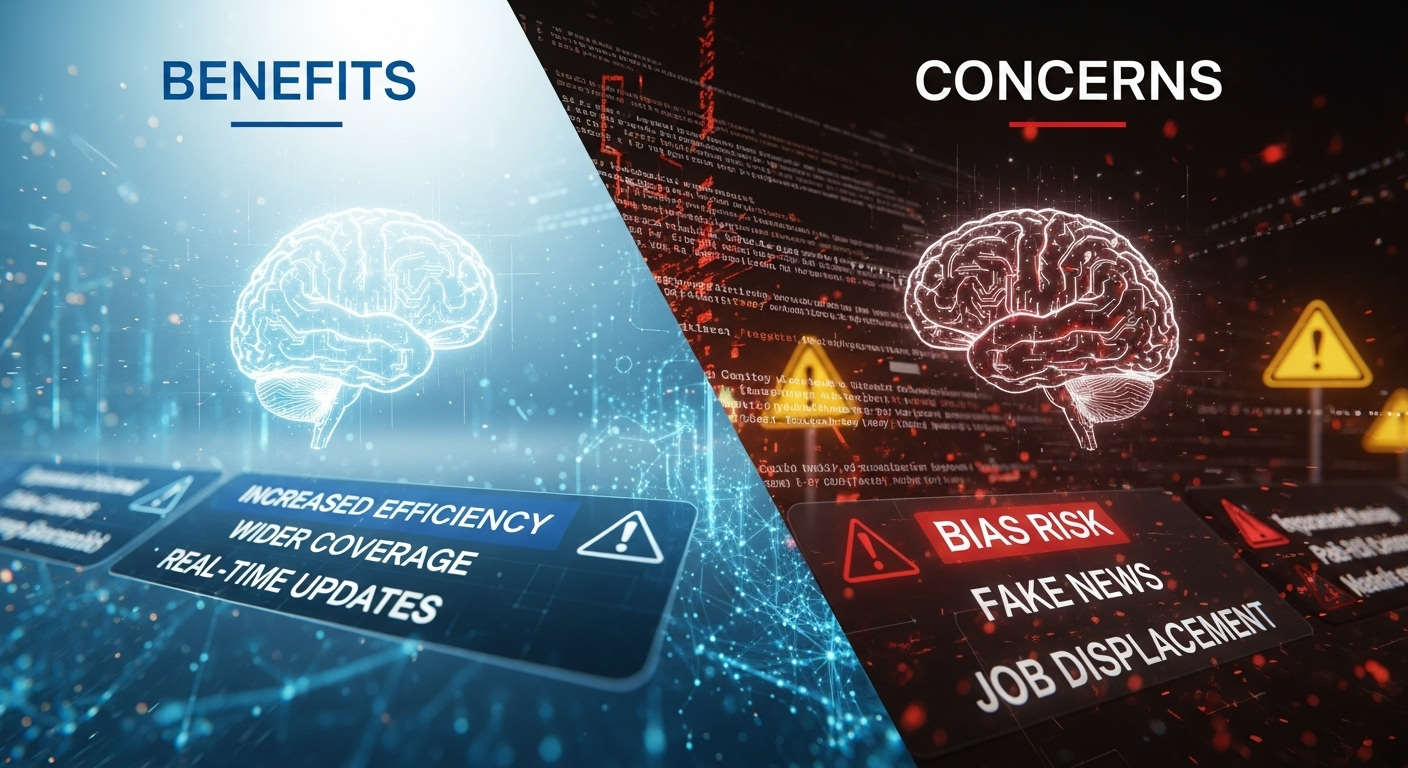
Let’s talk about the obvious upside. The main benefit is, without a doubt, speed. AI can crank out articles at a rate that no human journalist could ever match. Think about it: real-time updates on elections, instant reports on natural disasters, and continuous coverage of financial markets. It’s a 24/7 news cycle on steroids. This is especially helpful for reporting on events where speed is crucial. For example, real-time updates in gaming tournaments or new releases.
And then there’s the cost factor. Hiring human journalists is expensive. Training them? Even more so. AI, on the other hand, offers the potential for significant cost savings. News organizations can automate routine reporting tasks, freeing up human journalists to focus on more in-depth investigations and analysis. Or, you know, they could just lay people off. Which, let’s be honest, is probably what’s actually going to happen in many cases.
But… is speed and efficiency always a good thing? I’m not so sure. Sometimes, the rush to be first can compromise accuracy and thoroughness. And when it comes to news, accuracy is paramount.
The Bias Problem and Echo Chambers
Okay, this is where things get really interesting (and slightly terrifying). AI isn’t some neutral, objective observer. It’s trained on data created by humans. And humans, as we all know, are inherently biased. So, if the data used to train an AI is biased, the AI will inevitably reflect those biases in its reporting. It’s like that old saying: garbage in, garbage out. As highlighted in The Economist’s special report last summer, algorithms can perpetuate and even amplify existing societal inequalities.
Consider this: If an AI is primarily trained on news articles that portray a particular group of people in a negative light, it’s likely to produce news reports that perpetuate those negative stereotypes. And that’s a huge problem.
And that leads to the echo chamber effect. If an AI is constantly feeding you news that confirms your existing beliefs, you’re less likely to be exposed to alternative perspectives. Which can lead to increased polarization and a deepening of societal divisions. I keep coming back to this point because it’s crucial: AI can be a powerful tool for both good and evil. It all depends on how we use it.
The Human Element: Why We Still Need Journalists
Look, I’m not saying that AI is inherently evil. It has the potential to be a valuable tool for journalists. But it can’t replace the human element. There is something so special about human journalism.
Human journalists bring critical thinking, empathy, and a deep understanding of human nature to their reporting. They can ask the tough questions, challenge assumptions, and hold power accountable. They can also connect with people on a human level, building trust and fostering understanding. During my five years working with various news outlets, I saw this firsthand. You just can’t automate that.
And that’s why I believe that the future of news lies in a hybrid approach: combining the speed and efficiency of AI with the critical thinking and human touch of human journalists. Let AI handle the routine reporting tasks, freeing up human journalists to focus on the more complex and nuanced stories that require human judgment and empathy. But this requires serious investment. Something which, realistically, isn’t going to happen any time soon.
By the way, did you check out this awesome article about solutions journalism? It’s a different side of reporting but it’s so important.
Navigating the Future of News
Let me try to explain this more clearly. The rise of AI-generated news is not inherently bad, but it does present us with some serious challenges. We need to be aware of the potential biases and limitations of AI, and we need to ensure that human journalists continue to play a vital role in the news ecosystem. Otherwise, we risk losing something essential: the human element. And if that happens, well, we’re all in trouble.
And speaking of important things, check out this interesting point of view on social media’s influence on politics.
What do you think? Are you optimistic about the future of AI-generated news? Or are you more concerned about the potential risks? I’d love to hear your thoughts.
FAQ: The Rise of AI-Generated News
How does AI-generated news actually work?
Basically, AI algorithms are trained on massive datasets of text and data. They learn to identify patterns and relationships, and then use that knowledge to generate new articles. It’s kind of like teaching a computer to write by feeding it millions of examples of good writing. The AI can then analyze data from various sources and create news reports based on that data. Think of it like a super-fast, super-efficient research assistant that can write a coherent report based on its findings.
What are the main concerns about the rise of AI-generated news?
The biggest concerns revolve around bias, accuracy, and the potential for job losses in the journalism industry. As mentioned earlier, AI can perpetuate existing biases if it’s trained on biased data. There’s also the risk that AI-generated news will be less accurate than human-written news, especially when it comes to complex or nuanced topics. The frustrating thing about this topic is the potential for misuse and manipulation. It could be used to spread misinformation or propaganda on a large scale.
How do I know if a news article is AI-generated?
That’s a tough one. It’s getting harder and harder to tell the difference between AI-generated and human-written news. Some AI-generated articles may lack the depth, nuance, and critical thinking of human-written articles. You can also look for inconsistencies or errors in the writing. And of course, you should always check the source of the article and be wary of news from unfamiliar or unreliable sources. Ultimately, critical thinking and healthy skepticism are your best defenses.
Can AI-generated news replace human journalists entirely?
I seriously doubt it. While AI can automate certain tasks, it can’t replace the critical thinking, empathy, and human connection that human journalists bring to their work. Human journalists are essential for in-depth investigations, holding power accountable, and connecting with communities on a human level. My prediction is that we’ll see a hybrid approach, where AI assists human journalists, but doesn’t replace them entirely.