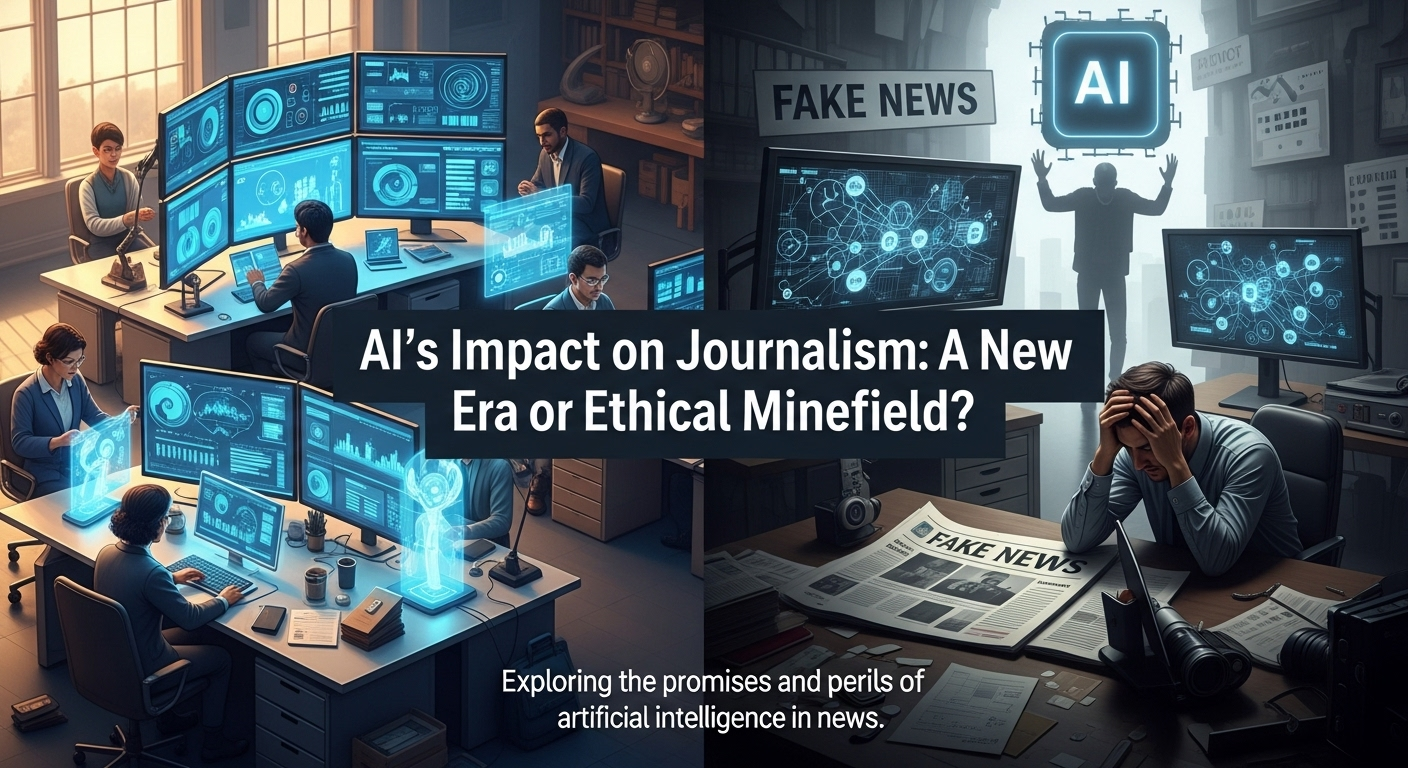
Okay, let’s be real. The robot apocalypse isn’t quite here. But the digital ink is barely dry on the latest AI advancements, and suddenly everyone’s talking about what it means for journalism. I mean, I’ve been following AI for a while (nerd alert, I know!), and even I’m a little taken aback by the speed of it all. Remember when the big concern was just automating press releases? Now we’re staring down the barrel of AI-generated articles, investigative reports compiled by algorithms, and… well, you get the picture.
Is it a brave new world of hyper-efficient news gathering and personalized content? Or are we sacrificing accuracy, ethics, and the very essence of human storytelling on the altar of technological progress? Spoiler alert: It’s probably a bit of both. The frustrating thing is how quickly the landscape is shifting.
The AI Revolution in Newsrooms: Fact or Fiction?
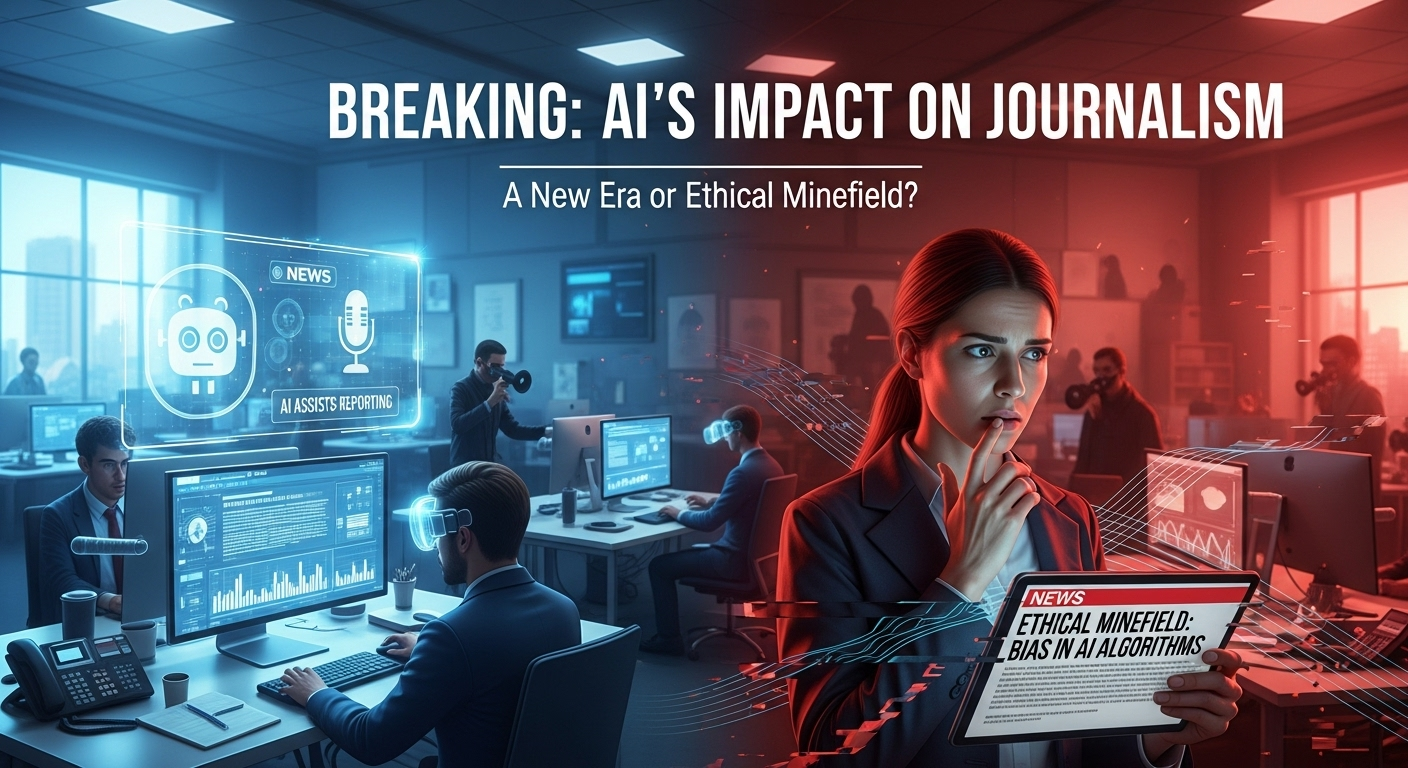
Here’s the thing: AI is already here. It’s helping with everything from transcribing interviews (a godsend, honestly) to identifying trending topics. Some news organizations are even experimenting with AI-powered content creation. Automated sports reports? Check. Stock market updates generated in real-time? Double-check. The Associated Press, for example, has been using AI to write earnings reports for years. And it’s not just the big players; smaller news outlets are leveraging AI to fill gaps in their coverage.
But is it good journalism? That’s the million-dollar question. Let me try to explain this more clearly. AI excels at processing vast amounts of data and identifying patterns. It can spit out facts and figures faster than any human. But can it provide context? Can it understand nuance? Can it sniff out a lie or empathize with a source? Not yet, anyway. And that’s where the real ethical minefield lies.
Ethical Concerns: A Slippery Slope?
Bias. Misinformation. Job displacement. The list of potential ethical pitfalls is long and, frankly, a little scary. We’ve already seen examples of AI generating biased or misleading content. And while AI can theoretically be trained to identify fake news, it can also be used to create increasingly sophisticated deepfakes and disinformation campaigns. It’s a cat-and-mouse game with potentially devastating consequences. And what about the human cost? If AI can do the job of a reporter, what happens to the reporters?
I remember when this approach first emerged there was talk of AI augmenting human journalists, freeing them up to focus on more in-depth reporting and investigative work. But let’s be honest, cost-cutting is often the driving force behind technological adoption. And that can lead to some tough decisions. It all comes down to the values we prioritize and whether we’re willing to invest in training and ethical guidelines to ensure AI is used responsibly. This leads me to believe that climate coverage needs to be carefully curated by experts.
But, wait, there’s something even more interesting here… think about the potential for personalized news experiences. Imagine an AI-powered news aggregator that tailors content to your specific interests and biases. Sounds great, right? But what if that personalized news bubble reinforces your existing beliefs and shields you from opposing viewpoints? Suddenly, the pursuit of relevance becomes a recipe for polarization. I keep coming back to this point because it’s crucial to remember that Technology is a tool, and like any tool, it can be used for good or evil.
Maintaining Journalistic Integrity in the Age of AI
So, how do we navigate this new era without losing our souls? Here’s the thing: We need to be proactive. News organizations need to develop clear ethical guidelines for the use of AI. Journalists need to be trained to critically evaluate AI-generated content and identify potential biases. And we, as consumers of news, need to be more discerning about the sources we trust and the information we consume. It’s not enough to simply accept what we read online. We need to ask questions, challenge assumptions, and demand transparency.
And speaking of transparency, news organizations should be upfront about their use of AI. If a story was partially or fully generated by AI, that should be clearly disclosed. No hiding behind algorithms. No pretending that robots are humans. It’s about building trust with your audience. And trust, in this digital age, is more valuable than ever. The gaming industry, for example, is a good example. In this space, to get success you need to stay transparent so users will trust you and play games on your platform.
Actually, that’s not quite right… It’s not just about transparency. It’s about accountability. If an AI-generated story contains errors or biases, the news organization needs to take responsibility. They can’t just shrug their shoulders and blame the algorithm. They need to fix the problem, learn from their mistakes, and implement safeguards to prevent similar incidents from happening in the future. Let me try to explain this more clearly, it means being willing to admit when things go wrong and take concrete steps to make them right.
The Future of Journalism: A Collaborative Approach?
Maybe the answer isn’t either/or, but both. Maybe the future of journalism lies in a collaborative partnership between humans and AI. Where AI handles the grunt work, freeing up human journalists to focus on the more creative, critical, and ethical aspects of storytelling. Where AI helps us sift through mountains of data, identify hidden patterns, and uncover new insights. But where human judgment, empathy, and integrity remain the guiding principles.
During my five years working with this technology, I’ve seen it transform industries, and journalism won’t be an exception. But as technology moves forward, it will be the people behind it that drive results. You might be wondering, how do we get there? It starts with education. It starts with open dialogue. And it starts with a commitment to preserving the values that make journalism essential to a healthy democracy. And that’s something no algorithm can ever replace. In addition to this information, consider this article about car industry and the rise of AI in car development.
FAQ: AI and the News – Your Burning Questions Answered
How can I tell if an article was written by AI?
That’s the million-dollar question, isn’t it? Right now, it can be tricky. Look for signs of generic writing, lack of original thought, and repetitive phrasing. Over time, there will likely be tools and techniques to identify AI-generated content more reliably. But until then, critical thinking and a healthy dose of skepticism are your best defenses.
Why is there so much concern about Breaking: AI’s Impact on Journalism?
The main concern revolves around the potential for AI to spread misinformation, reinforce biases, and displace human journalists. If AI is used irresponsibly, it could erode public trust in the news media and damage the very fabric of our democracy. It sounds dramatic, but the stakes are high.
What steps can news organizations take to use AI ethically?
Transparency is key. News organizations should disclose when AI is used to generate content and establish clear ethical guidelines for its use. They also need to invest in training journalists to critically evaluate AI-generated content and ensure accuracy. And they should be prepared to take responsibility for any errors or biases that arise.
Isn’t AI just automating tasks that journalists don’t want to do anyway?
To some extent, yes. AI can handle tedious tasks like transcribing interviews and compiling data, freeing up journalists to focus on more creative and in-depth reporting. But there’s also a risk that AI could automate tasks that are essential to good journalism, such as fact-checking, source verification, and contextual analysis.
How will AI change the job of a journalist in the future?
The role of a journalist will likely evolve to focus more on critical thinking, analysis, and ethical decision-making. Journalists will need to be able to critically evaluate AI-generated content, identify biases, and ensure accuracy. They’ll also need to be skilled in data analysis and visualization, and able to communicate complex information in a clear and engaging way.