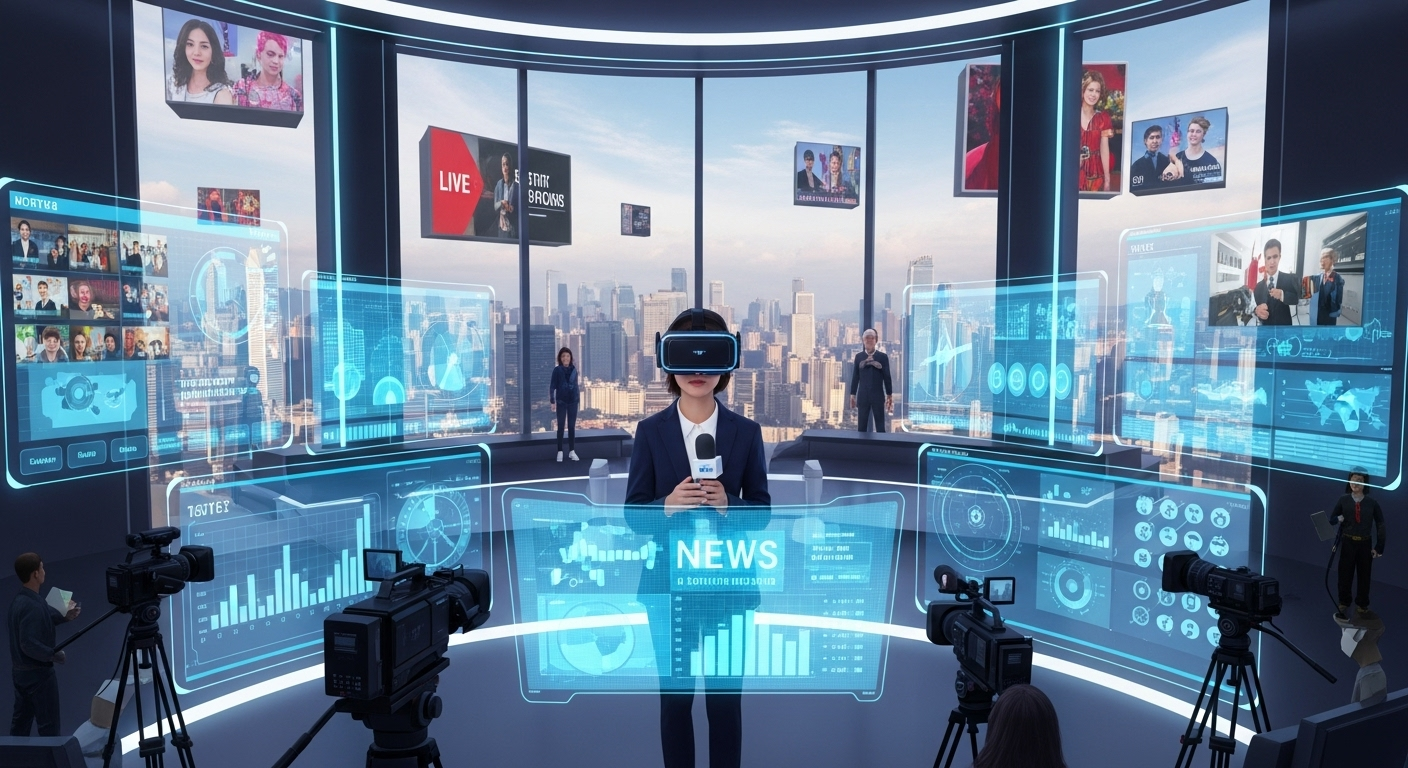
Okay, so picture this: You’re not just reading about a protest; you’re in it. Virtually, of course. News consumption? It’s not just evolving; it’s teleporting. The metaverse newsroom… it sounds like something straight out of a William Gibson novel, right? But here’s the thing, it’s rapidly becoming reality.
I remember when the idea of ‘virtual reality’ was firmly planted in the realm of science fiction. Now? My nephew uses VR to attend his online classes. It’s wild how quickly things change.
And with that change comes a huge potential shift in how we get our news. Think less scrolling, more experiencing. Immersive journalism isn’t just a buzzword; it’s a paradigm shift. But what does it all mean? Good question. Let’s dive in.
The Allure of Immersive Journalism
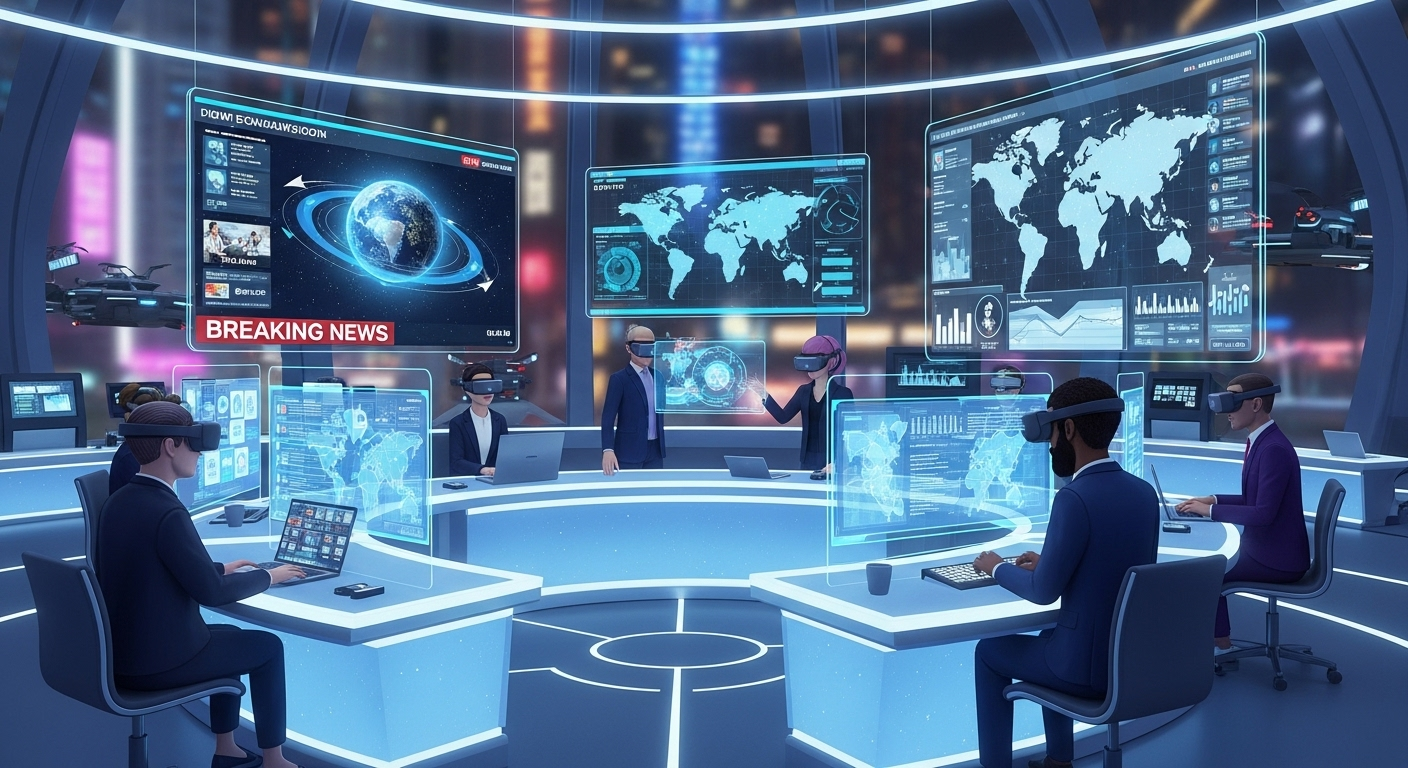
The frustrating thing about traditional news is its inherent distance. We read reports, watch videos, and see photos, but it’s all filtered through a screen. We’re observers, not participants. The metaverse newsroom, though? It promises to break down that barrier. Imagine being able to walk through a virtual reconstruction of a crime scene, or stand on the front lines of a conflict zone – all from the safety of your own home. Actually, ‘safety’ is a key point here. Ethical considerations are HUGE, which we’ll get to.
Immersive journalism offers a level of empathy and understanding that traditional media simply can’t match. It’s one thing to read about the devastation caused by a natural disaster, but quite another to virtually experience the aftermath. Virtual reality journalism aims to create a sense of presence that fosters a deeper connection with the story and the people affected by it.
Challenges and Ethical Considerations
Now, before we get too carried away with the utopian vision of a metaverse newsroom, let’s address the elephant in the (virtual) room: ethics. And there are a LOT of elephants. Think about the potential for manipulation. Could VR experiences be used to sway public opinion or even fabricate events? It’s a very real concern.
The question of authenticity is also paramount. How can we ensure that virtual news experiences are accurate and unbiased? How do we avoid the pitfall of creating ‘deepfakes’ that blur the line between reality and fiction? This is where journalistic integrity becomes more critical than ever. We need strict guidelines and ethical frameworks to prevent the metaverse newsroom from becoming a tool for misinformation.
And then there’s the digital divide. Not everyone has access to VR technology. If the metaverse newsroom becomes the primary source of information, what happens to those who are left behind? This is the kind of problem where technology can widen, not close, the gaps of access.
The Evolving Role of the Journalist
The rise of the metaverse newsroom is going to change the role of the journalist dramatically. No longer will they be solely responsible for reporting facts; they’ll also be tasked with creating immersive experiences. This requires a new set of skills, including virtual world design, 3D modeling, and interactive storytelling. It sounds overwhelming, but it’s also an incredible opportunity. I’ve got to admit, this part fascinates me. Imagine crafting narratives that literally place people inside the story.
But here’s the thing: the core values of journalism – accuracy, fairness, and objectivity – remain essential. Journalists must be vigilant in ensuring that virtual news experiences are not only engaging but also ethically sound. It’s a balancing act, but one that is crucial for the credibility of the metaverse newsroom.
And think about the sourcing. How do you verify information in a virtual environment? Can you trust the accounts of avatars? The rules are being rewritten.
Examples of Metaverse Newsrooms in Action
It’s not all theoretical, you know. There are already examples of metaverse newsrooms emerging. Some news organizations are experimenting with virtual reality documentaries that allow viewers to experience events firsthand. Others are creating interactive simulations that let users explore complex issues from multiple perspectives. Think of it like walking through a documentary.
I initially thought this was all hype, but I’ve seen some pretty compelling examples. For instance, the Kia Sorento 2025 Diesel Test allows users to virtually test the vehicle, providing a first-hand experience of its features and performance. And that’s only scratching the surface. We are seeing a surge of virtual experiences in gaming as well; there are many websites which have online games to play without downloading anything; Crazy Games is one such website which allows you to play games without downloading.
These early experiments are paving the way for a future where news consumption is no longer a passive activity but an active and immersive experience. Whether that future is good or bad… well, that depends on us.
Oh, and I almost forgot! The potential for data visualization in the metaverse is mind-blowing. Imagine exploring complex datasets in three dimensions, interacting with information in a way that’s simply not possible on a flat screen. Think about understanding climate change not just through charts and graphs, but by walking through a virtual simulation of rising sea levels.
The Audi Q4 Sportback e-tron proves its electric strength: The Audi Q4 Sportback e-tron proves its electric strength .
FAQ: Your Questions About the Metaverse Newsroom Answered
How will the metaverse newsroom affect traditional journalism?
That’s the million-dollar question, isn’t it? I don’t think it will completely replace traditional journalism, but it will definitely augment it. Think of it as another tool in the journalist’s arsenal. The core principles of reporting will remain the same, but the way stories are told will evolve. The traditional news outlets need to see this shift as an opportunity to engage with audiences on a deeper level, not as a threat to their existence.
What are the risks of relying too heavily on virtual reality for news?
Ah, a crucial question! The risk of manipulation is huge. If we’re not careful, the metaverse newsroom could become a breeding ground for misinformation and propaganda. It’s also important to remember that virtual reality is not reality. It’s a simulation, and simulations can be biased or incomplete. We need to maintain a healthy dose of skepticism and critical thinking when consuming news in the metaverse.
How do I know if a metaverse news experience is trustworthy?
Good question! Look for established news organizations with a reputation for integrity. Check the sources of information and be wary of experiences that seem too sensational or biased. Pay attention to the design of the virtual environment. Is it realistic and accurate, or does it seem overly stylized or manipulated? And, of course, trust your gut. If something feels off, it probably is. And it needs to be verified.
Will The Metaverse Newsroom: How Virtual Reality is Changing News Consumption be accessible to everyone?
That’s the big challenge. Right now, VR technology is still relatively expensive and not universally accessible. But as technology advances and prices come down, the metaverse newsroom will hopefully become more inclusive. It’s crucial that we address the digital divide and ensure that everyone has the opportunity to participate in this new era of news consumption.
So, there you have it. The metaverse newsroom: a wild, exciting, and potentially transformative frontier. It’s a space with both immense promise and significant challenges. The future of news is being written right now, and it’s up to us to ensure that it’s a future we can all be proud of.